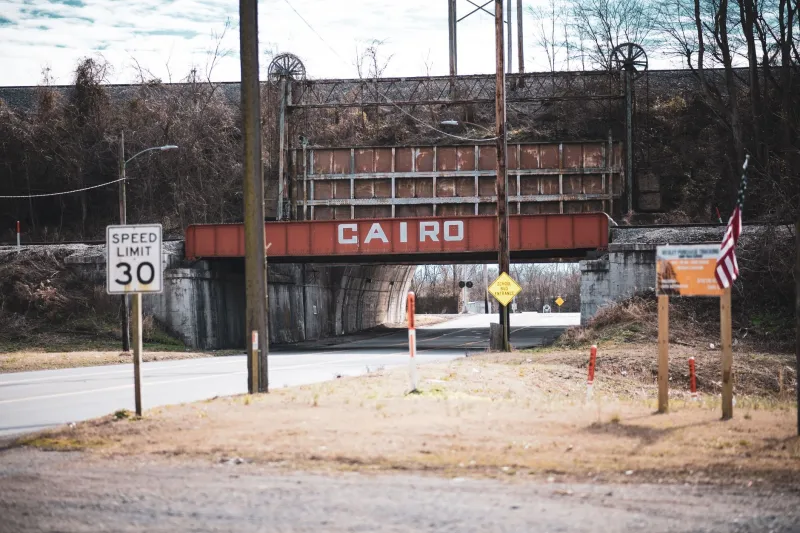
Cool Buildings, Hot Exemptions: Following Illinois' Data Center Tax Break Trail

A data center is, from the outside, an unremarkable box: gray walls, backup generators, a fence. Inside, it is a machine for converting electricity into computing. And in Illinois, it has also become a machine for converting state and local tax policy into private capital.
The mechanism is not hidden. It is simply hard to follow. Illinois grants sales-tax exemptions on the equipment that fills these facilities — servers, cooling systems, electrical gear — to operators who commit to minimum investment levels and, in most cases, a specified number of jobs. Counties and municipalities can layer their own abatements on top. The result is a stack of benefits granted by different bodies, tracked in different systems, and disclosed in different formats, if at all.
That fragmentation is the story. Not whether the incentives exist — they do, and they are lawful — but whether the public can see, in one place, what was given up and what was received.
The Shape of the Program
Illinois' data center incentive framework dates to 2019, when lawmakers created a targeted sales-tax exemption for qualified facilities, later extended and revised. Qualifying operators typically must meet a capital investment threshold and a job-creation standard, and must locate in a designated area or satisfy a colocation requirement. Certifications run through the Department of Commerce and Economic Opportunity, with the Department of Revenue administering the exemption itself.
On paper, that is a clean division of labor. In practice, it means the answers to basic questions — who is certified, for how much equipment, against what promises — live in more than one agency and are rarely assembled into a single public table. DCEO publishes a list of certified facilities. The Revenue Department does not publish a facility-level accounting of forgone sales tax. Local abatements, meanwhile, are negotiated at the county and municipal level, where the records exist but only if someone asks.
Where the Ledger Thins Out
Three gaps matter most for accountability.
First, the value of the exemption is estimated, not reported. Sales-tax exemptions are typically described in aggregate fiscal notes rather than tied to individual parcels or operators. A resident can learn that a category of exemption costs the state a certain amount in a given fiscal year, but not which facility generated which share. That is a structural limitation of how exemptions are administered, not necessarily an evasion — but it makes cost-benefit analysis difficult by design.
Second, the promise side is self-reported and lightly audited. Investment and job targets are stated in applications and certifications. Whether the jobs materialized, whether they paid the wages promised, and whether they went to local residents are questions that require follow-up documentation that is not routinely published. Compliance reviews exist; their findings generally are not public.
Third, the local layer is invisible. A school district that forgoes property tax revenue on a newly built facility does not post a line item saying so. The abatement appears as a smaller levy, a renegotiated agreement, or an enterprise zone designation buried in board minutes. Multiply that across the counties and districts hosting these facilities and you have a genuine accounting problem: the true public cost is distributed across dozens of taxing bodies, each of which reports it differently.
What Residents Can Actually Request
The good news is that most of the underlying documents are public records. The work is knowing what to ask for.
Start with the state. A request to DCEO for certified facility lists, application materials to the extent they are disclosable, and any compliance or recapture records will establish the universe of deals. A parallel request to the Department of Revenue for exemption certificates and aggregate exemption data will establish scale.
Then go local. County boards and school districts that host these facilities hold the abatement agreements, the intergovernmental agreements, and the tax increment or enterprise zone documents that govern them. Under the Illinois Freedom of Information Act, these are presumptively open; the burden falls on the public body to cite a specific exemption, not on the requester to justify the ask.
Useful items to request:
- The full executed abatement or incentive agreement, including all amendments and side letters.
- Any cost-benefit analysis or fiscal impact study prepared before approval.
- Compliance reports, clawback determinations, or recapture notices.
- Meeting minutes and recordings for the votes that approved the deal.
- The projected versus actual tax revenue for the affected taxing districts, by year.
Questions That Deserve an Answer
A serious accounting of these deals would answer four questions for each facility: How much state sales tax was forgone, by fiscal year? How much local property or sales tax was abated, by taxing district? How many jobs were created, at what wages, and how many went to residents of the host county? And if the operator fell short, what did the public recover?
Those are not hostile questions. They are the same questions any lender would ask before extending credit, and an exemption is a form of credit extended by the public.
The Disclosure Fix
The cheapest reform is consolidation. A single annual report, published by DCEO in a machine-readable format and joined to local abatement records, would let residents, journalists, and county boards evaluate these deals on evidence rather than press releases. The state already collects most of the necessary data; what is missing is the decision to publish it in one place, at the facility level, with dollar figures attached.
Until then, the accounting falls to the public — one records request at a time. That is slower than it should be. It is also how every meaningful transparency improvement in Springfield has started.