Blight by Declaration: How Illinois TIF Districts Outlive the Case for Them

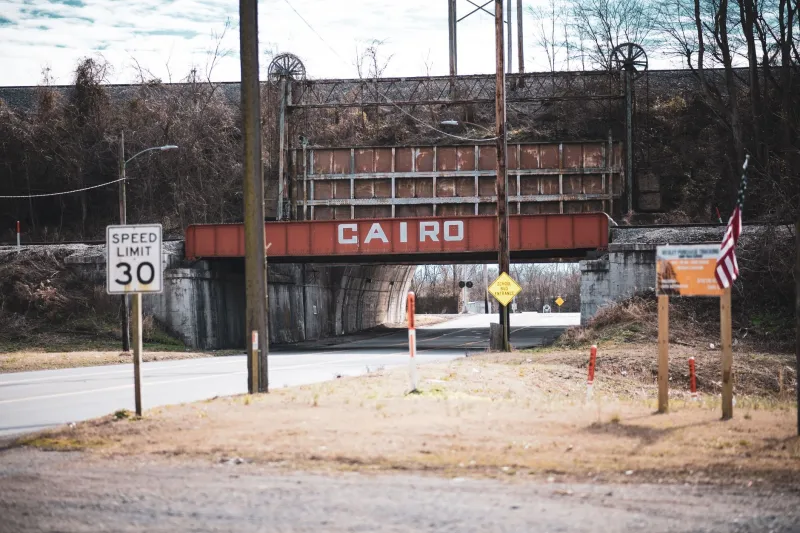
Photo: Illinois downtown redevelopment construction site with tax increment financing district buildings, via worldlyknown.com
Tax increment financing is one of Illinois local government's most consequential powers, and one of its least legible. A municipality designates an area as blighted, freezes the property tax base for every overlapping taxing district, and captures the growth in property tax revenue for redevelopment. The pitch is straightforward: public investment unlocks private construction, and the increment pays for the public side. The record question is equally straightforward: when the job is done, who turns off the tap?
As of November 2026, Illinois Open Gov reviewed available TIF filings across a sample of municipal websites, county clerk offices, and joint review board records. The pattern is not a blanket indictment of every district. It is a warning about a system that depends on local disclosure and often does not get it. In too many places, the annual report is late, missing, or buried; the joint review board rarely meets; and the surplus sits in the account while the original blight finding grows older and less convincing.
What a TIF Actually Does
A TIF district does not create a new tax. It redirects the growth in property taxes within a defined area. For the life of the district, the taxing bodies that serve the area—county, city, school district, park district, library, and others—continue to receive roughly the tax revenue they received when the district was created. The increment above that frozen base goes to the municipality's TIF fund, where it is spent on eligible redevelopment costs.
The mechanism can be legitimate. It can pay for land assembly, environmental cleanup, infrastructure, and other costs that private developers will not carry alone. But the same mechanism can become a long-term revenue shelter if the project is completed, the blight is gone, and the district continues to collect. Illinois law sets a general limit of 23 years, with limited extensions available for certain purposes. The limit matters only if someone tracks it.
The Report That Should Exist
State law requires municipalities to produce annual TIF reports. The reports are supposed to show revenue received, expenditures made, obligations incurred, and the status of the district. They are not merely administrative housekeeping. They are the public ledger that lets a resident, a school board member, or a county official see whether the increment is being used as promised.
In our review, the quality of disclosure varied sharply. Some municipalities post a clean PDF with a multiyear table. Others post a scanned page from an older fiscal year. Still others have no TIF page at all, leaving the records available only after a formal request. The result is a county-by-county patchwork in which the same statutory obligation produces wildly different levels of public access.
The absence of a single consolidated state dashboard makes the problem worse. Illinois residents cannot easily compare districts across county lines or even within the same county. A school district that relies on property taxes may know a TIF exists, but it may not have a current statement of how much increment is being diverted from its taxing area. That is a transparency gap with direct fiscal consequences.
A County-by-County Pattern
Our sampling found three recurring patterns. First, districts with active construction or recent amendments tended to have more current paperwork, largely because developers and bond counsel need the record. Second, older districts that had completed their headline projects often had the thinnest public files. Third, the availability of joint review board minutes was inconsistent even where the annual reports were posted.
Those patterns matter because TIF is not a one-time grant. It is a recurring diversion of property tax revenue. A school district that loses increment for two decades may receive no direct service from the TIF project. A county may be asked to approve a district's boundaries while lacking a current accounting of how the money is spent. The annual report is the minimum tool for oversight, and in many places it is not functioning as one.
Joint Review Boards, Explained
A joint review board is the formal oversight body for a TIF district. It includes representatives of the taxing districts that overlap the TIF area, along with a public member and a municipal representative. The board reviews the municipality's reports and can weigh in on amendments and extensions. In plain English, it is the table where the school district, county, and other taxing bodies are supposed to see what is happening to their revenue.
But a joint review board is only as useful as its records. If minutes are not posted, if meetings are irregular, or if the board is presented with summary numbers rather than the underlying report, the oversight is thin. Residents can request joint review board agendas and minutes along with the annual TIF report. Those two sets of records together tell a clearer story than either one alone.
The 'Blight' Label and Its Paper Trail
Every TIF district begins with a finding that the area is blighted. That finding is not a slogan. It is a legal conclusion supported by a study and a record. The study should describe the conditions—obsolescence, deterioration, inadequate infrastructure, or other statutory factors—that justify the designation.
Residents should be able to read that study and compare it with current conditions. If the blight has been cleared, the case for continuing to divert increment weakens. If the district has been amended to add new parcels or extend its life, the paper trail should show why. Without access to the blight study, the annual report, and the amendments, the public is asked to trust a label rather than examine it.
A Resident's TIF Records Checklist
A resident who wants to audit a local TIF district does not need a forensic accountant. The records are public, even when they are hard to find. Start with the ordinance that created the district and the blight study that supported it. Request the annual reports for the last five years, not just the most recent one. Ask for joint review board agendas, minutes, and votes. Request the redevelopment agreement with the developer and any amendments. Ask whether the municipality has declared a surplus and, if so, how it was distributed. Finally, ask for the district's termination date and any extension records.
If a municipality does not post the records, a written request under the Illinois Freedom of Information Act is the next step. Keep the request specific: name the district, the fiscal years, and the document types. A useful request is not a complaint. It is a ledger demand.
Why This Matters in 2026
Illinois governments are entering another budget season with familiar pressures: pension costs, infrastructure needs, and competing demands for property tax revenue. TIF is not a side issue in that debate. It determines which taxing bodies receive the growth from a local economy and which do not. When the annual reports are missing and the oversight boards are quiet, the public cannot tell whether a district is still serving its purpose or simply serving its balance.
The remedy is not complicated, but it requires sustained attention. Municipalities should post TIF annual reports in a searchable, consistent format. Joint review boards should meet on a regular schedule and publish their records. And residents should ask the question that the statute already anticipates: show us the report. A TIF district may begin with a blight finding, but it should end with a public accounting.