Citation Nation: The Illinois Villages Where Traffic Tickets Quietly Balance the Books
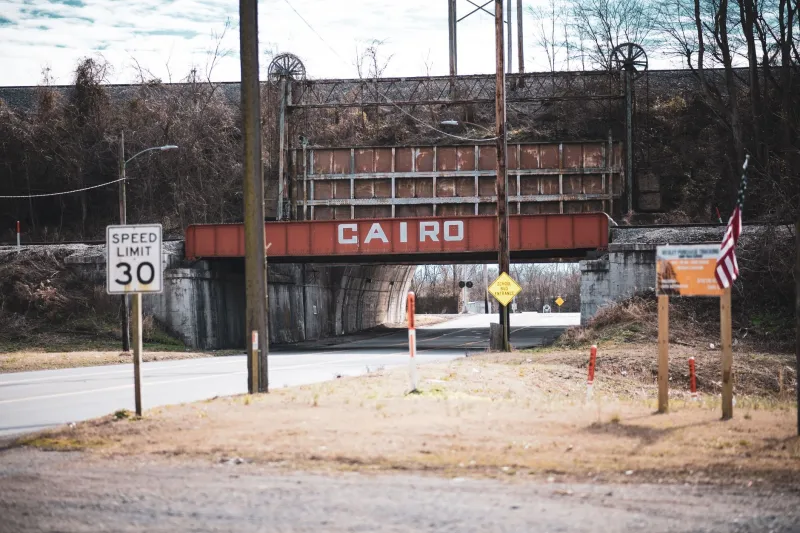
Every municipal budget tells a story. Some tell it in property tax levies; others in water rates. And in a scattering of small Illinois towns, the story is told in speeding tickets.
A review of audited revenue figures submitted to the Illinois Comptroller shows that in dozens of villages with populations under 3,000, fines, forfeitures, and penalties account for a share of general fund revenue that would be unthinkable in larger cities. In the most dependent municipalities, citation income approaches or exceeds 20 percent of the money available to run day-to-day government — a proportion that raises an uncomfortable question: when the budget leans on the radar gun, what does enforcement look like?
The Arithmetic of Dependence
The pattern is not random. It clusters along high-traffic corridors — state routes and interstates that slice through towns whose residential tax bases are thin. A village of 800 residents cannot extract much from 800 households. But a stretch of U.S. highway carrying thousands of commuters daily offers a revenue stream that never votes in a local election.
Statewide, aggregate fine revenue has been declining for years, a trend driven by license plate recognition, court consolidation, and statutory changes that redirected certain penalties away from municipal coffers. Yet the decline is uneven. Towns that built budgets around citation income have, in some cases, responded the way any organization responds to a shrinking revenue line: they adjusted enforcement, not expectations.
Publicly available audit data allows a rough ranking. At the top of the dependence list are villages where fines represent a share of general revenue several times the state median. At the bottom are the vast majority of Illinois municipalities, where penalties are a rounding error. The spread itself is the story — a 100-fold difference in reliance between otherwise comparable communities.
Why It Matters Beyond the Ledger
Budget dependence shapes behavior. Researchers who study municipal finance have long noted that jurisdictions relying heavily on fine revenue tend to issue more citations per capita, pursue more minor violations, and resist reforms that reduce penalty amounts. Illinois is not immune to this dynamic. The General Assembly effectively acknowledged it in 2019 when it abolished the practice of suspending drivers' licenses solely for unpaid parking and automated tickets — a reform that shrank municipal collections and, in some towns, opened a visible hole in the budget.
There is also an equity dimension. Fines fall hardest on drivers who can least afford them, and late fees compound quickly. A town that treats citations as infrastructure has, structurally, an incentive to keep that pipeline flowing.
None of this requires bad intent. A police chief in a revenue-dependent village may enforce scrupulously and evenly. But incentives do not need malice to operate, and a budget line item that grows when enforcement grows deserves scrutiny regardless of the people behind the badge.
Finding the Numbers Yourself
The best part of this story is that it requires no special access. Illinois municipalities must file annual audits with the State Comptroller, and those filings are posted publicly through the Comptroller's local government division searchable database.
Here is the ten-minute method:
- Search the Comptroller's database for your municipality and open the most recent Annual Financial Report.
- Locate the governmental funds revenue statement and find the line for fines, forfeits, and penalties.
- Divide that figure by total general fund revenues. Anything above roughly 10 percent is unusual; above 20 percent is a signal worth asking about.
- Compare several years. A declining trend with flat enforcement suggests a town restructuring its finances. A rising trend deserves a question at the next board meeting.
Cross-reference with the Illinois Department of Transportation's crash data for the same corridor. If citation volume is high but crash counts are flat or falling, safety is a weak justification for the enforcement pattern. If both are high, the tickets may be doing exactly what traffic engineering intends.
What to Ask at the Next Board Meeting
Residents who find their village on the high end of the ranking need not accuse anyone of anything. Three questions do the work:
- What percentage of the general fund comes from fines, and what is the five-year trend?
- Which corridors generate the most citations, and how does that map to crash data?
- What is the contingency plan if state reforms further reduce fine revenue?
A board with good answers has probably already done the work. A board without answers has told you something too.
Transparency, record by record, is the point. The audits are filed. The numbers are public. The only remaining step is for someone to read them.