Vendors, Lobbyists, and Ledger Lines: Tracing Illinois' Biggest 2024 State Contracts
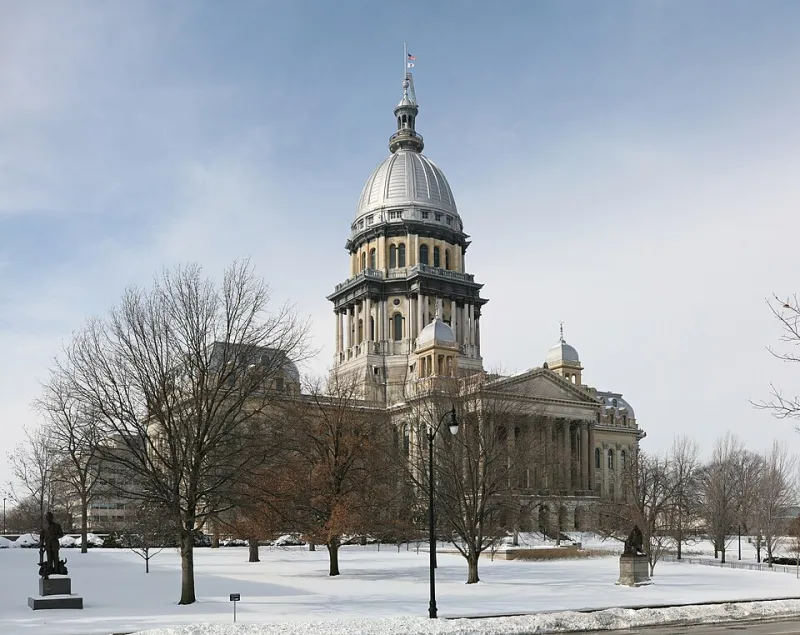
Photo: Daniel Schwen, CC BY-SA 4.0, via Wikimedia Commons
Every year, state agencies in Illinois sign contracts worth billions of dollars — for everything from Medicaid administration to highway resurfacing to information technology. Most residents never see these transactions. But buried in the state's procurement portals and the Illinois State Board of Elections' campaign disclosure database is a trail that, if followed carefully, tells a story about how power and money interact in Springfield.
We spent several weeks pulling 2024 contract award data through public records requests and cross-referencing it with lobbying registrations and campaign contribution filings. What follows is both a summary of what we found and a practical guide for readers who want to conduct similar reviews on their own.
The Scale of the Spending
Illinois' ten largest contract awards in 2024 collectively exceeded $4 billion in estimated value. The bulk went to a handful of familiar names: managed care organizations administering Medicaid benefits, IT integrators modernizing legacy agency systems, and construction firms handling large infrastructure projects funded in part by the Rebuild Illinois capital program.
Under the Illinois Procurement Code, most contracts above $100,000 are supposed to go through competitive bidding administered by the Chief Procurement Office. Yet a meaningful share of last year's largest awards — roughly a third by our count — were processed as sole-source procurements or emergency awards, categories that allow agencies to skip full competition when they can justify doing so.
Not every sole-source award is suspect. Sometimes only one vendor can realistically provide a service. But the frequency of these exceptions among the state's biggest checks is worth scrutiny, particularly when the vendors involved maintain active lobbying presences in the Capitol.
Where the Bidding Rules Bent
Competitive bidding exists to give taxpayers the best price and to keep favoritism out of procurement. When an agency claims an emergency or sole-source exemption, the justification is supposed to be documented and posted. In practice, we found justification memos that ranged from detailed and defensible to boilerplate — a single paragraph citing "unique qualifications" without explanation.
Consider three patterns we observed across the top ten awards:
- Renewal drift. Several large contracts began as competitive awards years ago but have been extended repeatedly, in some cases for a decade or more, without a fresh bid. Extensions are legal, but each renewal pushes a genuinely open competition further down the road.
- Emergency usage. Two sizable IT awards were classified as emergencies, with agencies citing deadlines tied to federal funding timelines. Critics, including some procurement reform advocates, argue that poor planning by an agency should not qualify as an emergency under the statute.
- Scope creep. A construction contract initially awarded at $80 million grew through change orders to more than double that figure. Change orders below certain thresholds do not trigger rebidding, creating a legal avenue for awards to expand well beyond their competitive price.
Following the Lobbyists — and the Donations
Illinois law requires lobbyists who touch procurement to register, and it imposes "pay-to-play" restrictions: firms seeking contracts above a threshold may not make campaign contributions to the officials who oversee those contracts. These rules, adopted after earlier scandals, were meant to dry up the practice of donating your way to a state contract.
The restrictions have gaps. Contributions from a vendor's executives' family members, from affiliated entities, or from the vendor's lobbying firm itself may not always fall under the prohibition, depending on the structure. And nothing stops a vendor from contributing to officials after a contract concludes, or to officials in a different procurement jurisdiction.
When we matched the vendors behind the ten largest awards against campaign finance data, we found that eight of the ten had made political contributions within the past four years — either directly, through political action committees, or through connected individuals. Several also retained some of Springfield's most established lobbying shops. None of this proves wrongdoing. But the pattern illustrates why transparency laws matter: citizens can only evaluate these relationships if the data is public and accessible.
How to Run This Analysis Yourself
The most important takeaway from our review is that none of this required special access. Here is the basic playbook:
- Pull contract awards. The Illinois Procurement Bulletin and the state's transparency portal list awards, including sole-source justifications. Download the data rather than reading it piecemeal.
- Identify the decision-makers. Note which agency and which procurement officer awarded each contract.
- Cross-reference lobbyists. The Secretary of State's lobbyist registration database lets you search by employer. See which firms represent your vendor of interest.
- Check the money. The State Board of Elections maintains a searchable contributions database. Look for donations from the vendor, its principals, its PAC, and its lobbyists — then compare against the pay-to-play thresholds in the Procurement Code.
- File a records request if the portal falls short. If justification memos or change-order documentation are missing, a FOIA request to the agency's FOIA officer can fill the gap. Agencies must respond within five business days under state law.
Why This Matters
Government spending is the connective tissue between policy promises and real-world results. When bidding rules are bent, when exceptions become routine, or when the same names cycle through the state's largest contracts year after year, taxpayers pay the price — sometimes literally, through higher costs, and always in confidence.
Illinois has stronger procurement transparency laws than many states. The records exist. The databases are online. What is often missing is the public attention that turns open records into actual accountability. That part is up to all of us.