The Last-Year Lift: Pension Spikes and the Quiet Arithmetic of Patronage
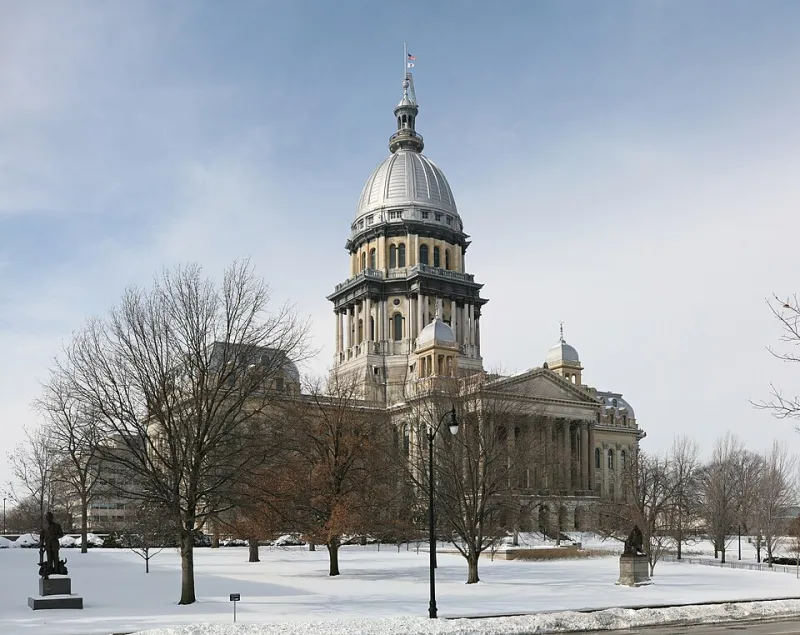
Photo: Chrismiceli, CC0, via Wikimedia Commons
Every pension system has its arithmetic. Illinois has its folklore. The story goes something like this: serve quietly for two decades, catch the eye of a friendly officeholder, and ride one golden year — a promotion, a title change, a pile of comp time cashed out at the eleventh hour — into a retirement check that a normal career could never earn.
It would be comforting to call that folklore. The data makes that hard.
What the Numbers Show
Sift through the compensation and pension records published by the state's retirement systems and a shape emerges: the end-of-career spike. A mid-level administrator earning in the $90,000s for years suddenly posts a final-year salary well into six figures. Overtime surges in a employee's last 12 months. A contract renegotiation lands, conveniently, just before a retirement date.
Under Illinois' pension formulas, those final-year figures aren't a footnote. They are the denominator of a lifetime annuity. Each dollar of a late-career spike is multiplied across decades of retirement payments, borne by taxpayers who never voted on the raise.
To be clear: not every spike is corrupt. Genuine promotions happen. Overtime in under-staffed agencies is real work. But when spikes cluster around politically connected positions — when the biggest lifts reliably accrue to those with the right patrons — the pattern stops looking like coincidence and starts looking like currency.
Patronage, Modernized
The old patronage model was crude: a precinct captain's cousin got a job. The modern version is subtler and far more expensive. Loyalty is repaid not with a salary but with a pension multiplier — a debt deferred until the worker retires and the officeholder who authorized the boost has moved on, run for higher office, or left the state entirely.
That's what makes it so resistant to reform. The cost of patronage today doesn't appear on today's budget. It appears on a ledger thirty years out, attributed to a formula rather than a decision.
Sunshine, Applied to Annuities
If Illinois is serious about breaking this cycle, the fix is not another commission. It is visibility. Specifically:
- Real-time pension calculation data. Pension systems should publish, contemporaneously, the salary inputs that feed each benefit calculation — not years later, in an annual report nobody reads.
- Spike flags. Any final-year salary increase beyond a defined threshold should trigger automatic, public disclosure of the authorizing documents: the contract, the promotion order, the overtime log.
- Attribution. Every pension-boosting compensation decision should carry the name of the official who approved it. Patronage thrives on anonymity; retirement it.
Some states have moved in this direction. Transparency statutes elsewhere treat public pension inputs as just that — public inputs, subject to the same scrutiny as a contract or a grant. Illinois, birthplace of the modern public pension promise, should not be a laggard in disclosing how those promises are priced.
A Cost, Not a Mystery
Taxpayers are asked to treat pension costs as weather: vast, complex, beyond anyone's control. They are neither. They are the accumulated output of individual decisions, made by named officials, on specific dates. If those decisions were made in daylight, in real time, with the pension math attached, we suspect many of them would be made differently.
That is the case, simply put: open the arithmetic. Let citizens see the raise, the retirement date, and the resulting annuity side by side. Patronage can survive scrutiny in the dark. It has rarely survived it in the light.