Justice Delayed by Design: Five FOIA Horror Stories and the Ten-Minute Fix

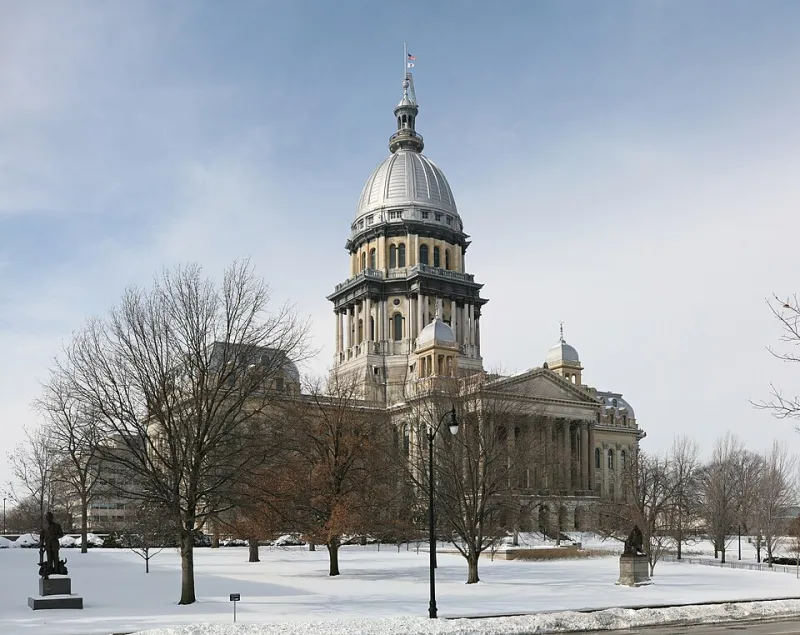
Photo: Adam Cuerden, Public domain, via Wikimedia Commons
The Illinois Freedom of Information Act promises a response within five business days. In theory, any resident can ask any public body for records, and the law presumes openness. In practice, as the five cases below demonstrate, the gap between the promise and the reality can stretch from weeks into years. Each example is drawn from public reporting and records requests we reviewed; names of requesters are used where they appeared in public coverage.
Five Requests That Tested the Law's Patience
1. The two-year police records fight. A Chicago journalist requested use-of-force records from a local police department in early 2022. The department acknowledged the request, then issued a series of extensions — a tool the statute permits for "commercial" or voluminous requests — followed by a denial citing ongoing litigation. The records were finally produced more than two years later, after the requester appealed to the Public Access Counselor and retained counsel. The delay outlasted the news cycle the records were meant to inform.
2. The school district's "undue burden." A suburban parent asked a school district for copies of vendor contracts for a building project. The district responded that fulfilling the request would be "unduly burdensome" — a defense allowed under the Act only when compliance requires substantial staff time. After the requester narrowed the request to specific date ranges and document types, the district produced the contracts in under two weeks. The original denial, it turned out, was a negotiating position, not a legal wall.
3. The pandemic-era health data stall. Early in the pandemic, a downstate reporter requested county-level nursing home inspection records. The state agency claimed the records were exempt as preliminary or deliberative material. Months of correspondence followed, and the PAC's office ultimately sided with the requester. The inspections, once released, revealed staffing deficiencies that had real public health implications.
4. The vanishing email thread. A taxpayer in central Illinois requested correspondence between a county board member and a developer. The county responded that no responsive records existed. The requester later learned — through a separate records request to a different body — that the emails did exist and had simply been routed through personal accounts. Personal devices used for public business are not exempt from FOIA, but enforcing that principle required a second request and a complaint.
5. The fee that priced out transparency. A student researcher requested zoning files from a municipality and received a fee estimate of more than $1,200 for photocopying and staff review time. Under the Act, fees are limited to actual reproduction costs for most requesters, and the first 50 pages of black-and-white copies must be free. After the requester cited the statute, the estimate dropped to zero.
The Pattern Behind the Delays
These cases share common threads. Public bodies lean on extensions, claim exemptions that do not hold up, or use fees as a deterrent. Most requesters, facing an opaque process, simply give up — and that silence is precisely what makes stalling an effective strategy. The Act's enforcement mechanism, a complaint to the Attorney General's Public Access Counselor, is free and surprisingly effective, but only requesters who know it exists tend to use it.
How to File Your Own Request in Under 10 Minutes
Transparency is not a privilege reserved for journalists. Here is a straightforward process that takes about ten minutes:
Minute 1–2: Define your request. Decide what you want and from whom. Illinois FOIA applies to state agencies, counties, municipalities, school districts, park districts, and most other public bodies.
Minute 3–4: Write a narrow, specific request. Vague requests invite delay. Instead of "all documents about the new development," write: "Copies of all building permits, inspection reports, and correspondence dated January 1, 2024, through June 30, 2024, concerning 123 Main Street." Specificity is your best protection against an "undue burden" claim.
Minute 5–6: Find the FOIA officer. Every public body must designate a FOIA officer and post contact information. Check the body's website; if you cannot find it, address your request to the agency's main office and mark it "FOIA Request."
Minute 7–8: Submit in writing, and keep proof. Email is fine and creates a timestamp. Include your name, contact information, a statement that the request is made under the Illinois Freedom of Information Act (5 ILCS 140), and whether you want electronic copies. Note that requesting records "for a commercial purpose" changes your rights, so state if your request is personal, journalistic, or for nonprofit research.
Minute 9–10: Calendar the deadline. The body has five business days to respond. Extensions add five more. If you receive a denial, the response must cite the specific exemption claimed. If you hear nothing, you may treat silence as a denial.
If the Request Stalls
You have two main remedies. First, file a request for review with the Public Access Counselor at the Attorney General's office — it can be submitted online and costs nothing. Second, you may sue in circuit court, where prevailing requesters can recover attorney's fees. Most disputes end long before litigation; a PAC inquiry letter often produces records within weeks.
A Skill Worth Practicing
The requesters in the stories above shared one trait: they did not take the first "no" as final. FOIA is a tool whose power depends entirely on use. Every resident of Illinois already owns it. Ten minutes is all it takes to pick it up.