The Cameras Nobody Requires: Inside the Broadcast Gap in Illinois School Governance

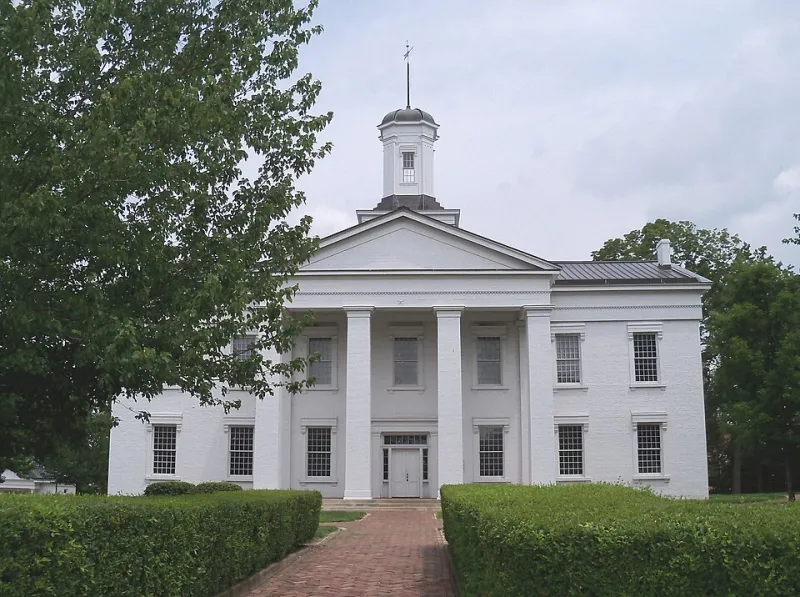
Photo: Simon Carey, CC BY-SA 2.0, via Wikimedia Commons
There is a particular irony in watching an empty boardroom on a Tuesday night while, thirty miles away, a school district's meeting proceeds with no camera at all. Illinois' Open Meetings Act obligates its largest elected bodies — school boards — to conduct business in public. It does not oblige anyone to make that public viewing practical.
The result is a transparency regime that looks better on paper than it performs on a screen. And for the hundreds of thousands of parents, taxpayers, and students with no realistic way to attend a 7 p.m. meeting in person, paper is not enough.
What the Record Shows
We reviewed the digital meeting practices of the twenty largest school districts in Illinois — from the City of Chicago Public Schools down through the suburban collar counties — scoring each on three measures: whether regular meetings are livestreamed or archived, whether agendas are posted with meaningful advance notice, and whether minutes are published in a searchable, timely way.
The spread is stark. Chicago, the state's largest district, offers full video archives and remote participation options. Several suburban giants — districts serving 25,000 students or more — do the same. But scattered among them are districts of comparable size where a resident can find no livestream, no video archive, and minutes posted weeks late, sometimes as little more than approved-but-unsearchable PDF scans.
A few patterns stand out:
- Livestream adoption correlates with budget, not obligation. Districts that broadcast do so voluntarily; there is no state requirement driving them.
- Agenda posting is the one near-universal practice, likely because board members themselves find agendas useful. Compliance follows convenience.
- Minutes quality varies wildly — from thorough, same-month narratives to bare-bones motion lists that obscure discussion entirely.
The Law's Quiet Loophole
The Open Meetings Act requires that meetings be open, that agendas be posted, and that minutes be kept. It requires none of the infrastructure that makes openness real in 2025: no livestream mandate, no video retention requirement, no deadline for posting minutes beyond what courts have loosely interpreted.
Legislators have periodically floated bills to require recording and posting of public body meetings. None has cleared both chambers. Opponents cite cost, but the objection has aged poorly — a basic livestream now requires a tablet, a free streaming account, and a Wi-Fi connection. Districts that claim hardship are often the same ones issuing take-home devices to every student.
A Sunshine Scorecard Worth Copying
Other states have begun addressing this gap with simple, standardized tools. The model worth adopting here is a sunshine scorecard: a uniform, annually published rating for each public body on a short list of measures —
- Livestream available? (Yes/No)
- Video archive retained and searchable? (Yes/No)
- Agendas posted at least 72 hours ahead? (Yes/No)
- Minutes posted within 30 days? (Yes/No)
No new enforcement bureaucracy. No mandates on content. Just a public, comparable grade — the kind of soft accountability that has moved states toward better records compliance in other contexts. Public bodies dislike being the only blank row on a chart, and that discomfort does work that statutes often don't.
Illinois has already proven it can lead on transparency statutes. What it lacks is the final step: treating digital access not as a courtesy but as the modern form of an open door. Until then, the state's school boards will keep meeting in public — for whoever happens to be in the room.