The Silence After the Comment: Grading Illinois Rulemaking on the Public Record
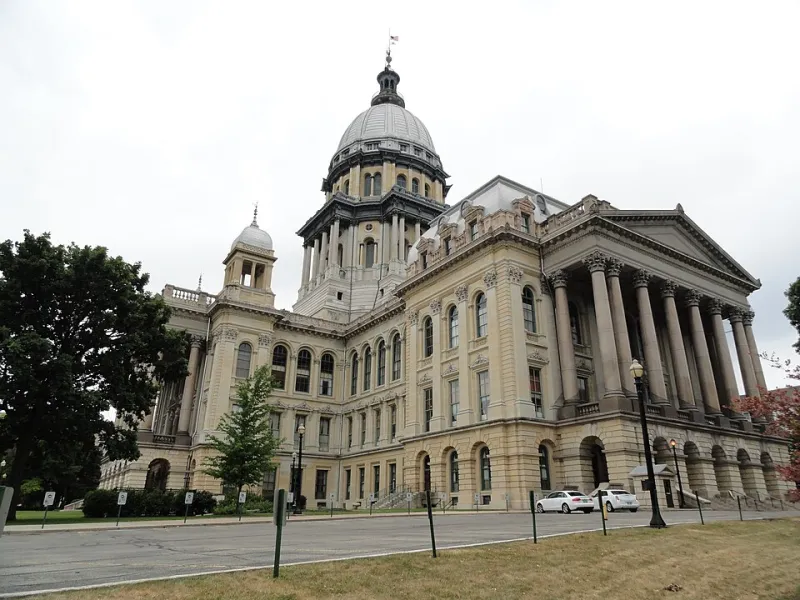
Photo: Meagan Davis, CC BY-SA 3.0, via Wikimedia Commons
A proposed rule can change a license fee, a cleanup standard, a school reporting duty, or a small business’s compliance burden. In Illinois, the public is given a chance to weigh in before that rule takes effect. The question for 2026 is whether that chance leaves a usable public record — or whether comment periods function as procedural theater, with notices posted, deadlines met, and the public’s input disappearing into an agency filing cabinet.
Illinois Open Gov examined the public-input trail around state agency rulemaking. The focus was not whether agencies technically accept comments. It was whether a resident, journalist, or legislator can later find the comments, understand what the agency did with them, and see why the final rule changed. That is the difference between a comment period and a comment record.
The Promise in the Statute
Illinois rulemaking runs through the Illinois Administrative Procedure Act and the Joint Committee on Administrative Rules, known as JCAR. Proposed rules are published in the Illinois Register, and agencies generally provide a comment period before adopting a final rule. The process is designed to give the public a formal voice and to give JCAR a chance to review agency action.
The statute and the surrounding practice create an expectation of a paper trail. Notices should identify the rule, the agency contact, and the deadline. Comments should be received. The agency should consider them. If the final rule differs from the proposal, the public should be able to see why.
In practice, the trail is uneven. Some agencies publish detailed rulemaking pages with links to the proposal, the comment deadline, and the final adoption package. Others post only the minimum notice. The result is a system where the public’s ability to participate depends heavily on which agency is writing the rule.
What We Graded
The 2026 scorecard uses five criteria. First, does the agency publish the proposed rule and the comment deadline in a clear, stable location? Second, does it publish the comments it receives, or at least a public comment file that can be requested without unnecessary delay? Third, does it provide a substantive response to significant comments, explaining acceptance, rejection, or modification? Fourth, does it publish a change log or explanation when the final rule differs from the proposal? Fifth, is the whole docket navigable — one page, working links, machine-readable files, and a clear connection to JCAR review?
Each criterion is worth four points. A perfect score is 20. The grades are not a measure of an agency’s policy choices. They are a measure of whether the public can follow the choices an agency made.
A notice-only posting cannot earn above a C on this scale. That is deliberate. A comment period without a comment record is an invitation to speak into a void. The public may have participated, but the public cannot verify what happened next.
The Pattern: Notice Without Conversation
The most common weakness is not outright secrecy. It is fragmentation. An agency may post a PDF notice on a program page, place the proposed rule in the Illinois Register, and route comments to an email inbox. Later, the final rule appears in a different section of the website. The comments themselves are often absent. A response document may be absent too.
When responses exist, they sometimes amount to a summary: comments were received, concerns were considered, the rule is adopted. That is not a response. A substantive response identifies the commenter’s concern, states whether the agency accepted or rejected it, gives a reason, and describes any change. It need not be long. It must be specific enough to show that the agency engaged with the record rather than merely acknowledging it.
The second weakness is timing. Comment deadlines can be clear in the notice but difficult to find later. Extensions may be announced in one place and not another. A resident who learns about a rule late in the process may find the deadline has passed, the final rule has been filed, and the supporting record is scattered across three web pages and a JCAR packet.
JCAR packets are valuable, but they are not a substitute for an agency-level docket. They are review documents, not a public comment archive. The agency that received the comment should be the agency that publishes the trail.
Why the Gap Matters
Rulemaking is where broad statutes become specific obligations. A law may say an agency shall protect public health or regulate a profession. The rule says what that means for inspection frequencies, application fees, reporting forms, and penalties. Public comment is one of the few chances for affected people to shape those details before they bind.
When the comment trail is thin, oversight weakens. Legislators cannot easily check whether an agency followed legislative intent. Courts may see only the final record the agency chose to assemble. Residents cannot tell whether their concerns were weighed or discarded. Advocacy groups cannot compare how different agencies treat similar objections.
The cost is not only abstract accountability. It is practical trust. A farmer, nurse, contractor, or local official who takes time to comment deserves to know whether the agency read the submission and why the final rule looks the way it does. A public comment file is the receipt.
A Ten-Minute Fix, Repeated 40 Times
The remedy is not exotic. It is standard records management. Each rulemaking should have a single public docket page. That page should link to the proposal, the notice, the comment deadline, every comment received, the agency’s response matrix, the final rule, and any change explanation. The files should be text-searchable and posted in a consistent format. The page should remain live after adoption.
A response matrix is especially useful. One row per significant comment, one column for the concern, one for the agency’s response, and one for any resulting change. Agencies can redact confidential information, but they should not redact the existence of the comment or the general subject matter. The default should be disclosure, with narrow exceptions.
JCAR could reinforce the standard by asking agencies to include a public comment docket link in their filings. The Illinois Register could require a consistent docket identifier. The Governor’s office could publish a simple model policy. None of these steps requires a new bureaucracy. They require a decision that the public record is part of the rulemaking, not an afterthought.
The Scorecard Standard
Illinois Open Gov will publish the 2026 scorecard as a living audit, with agency-by-agency grades and examples of both good practice and missing records. The point is not to shame agencies for receiving difficult comments. The point is to make the comment trail visible enough that the public can judge for itself.
A comment period should be a conversation with a record. When the record is missing, the conversation is unverifiable. Illinois residents are asked to participate in rulemaking. They should be able to see what happened after they did.